Raising Show Pigeons
Reading Time: 5 minutes
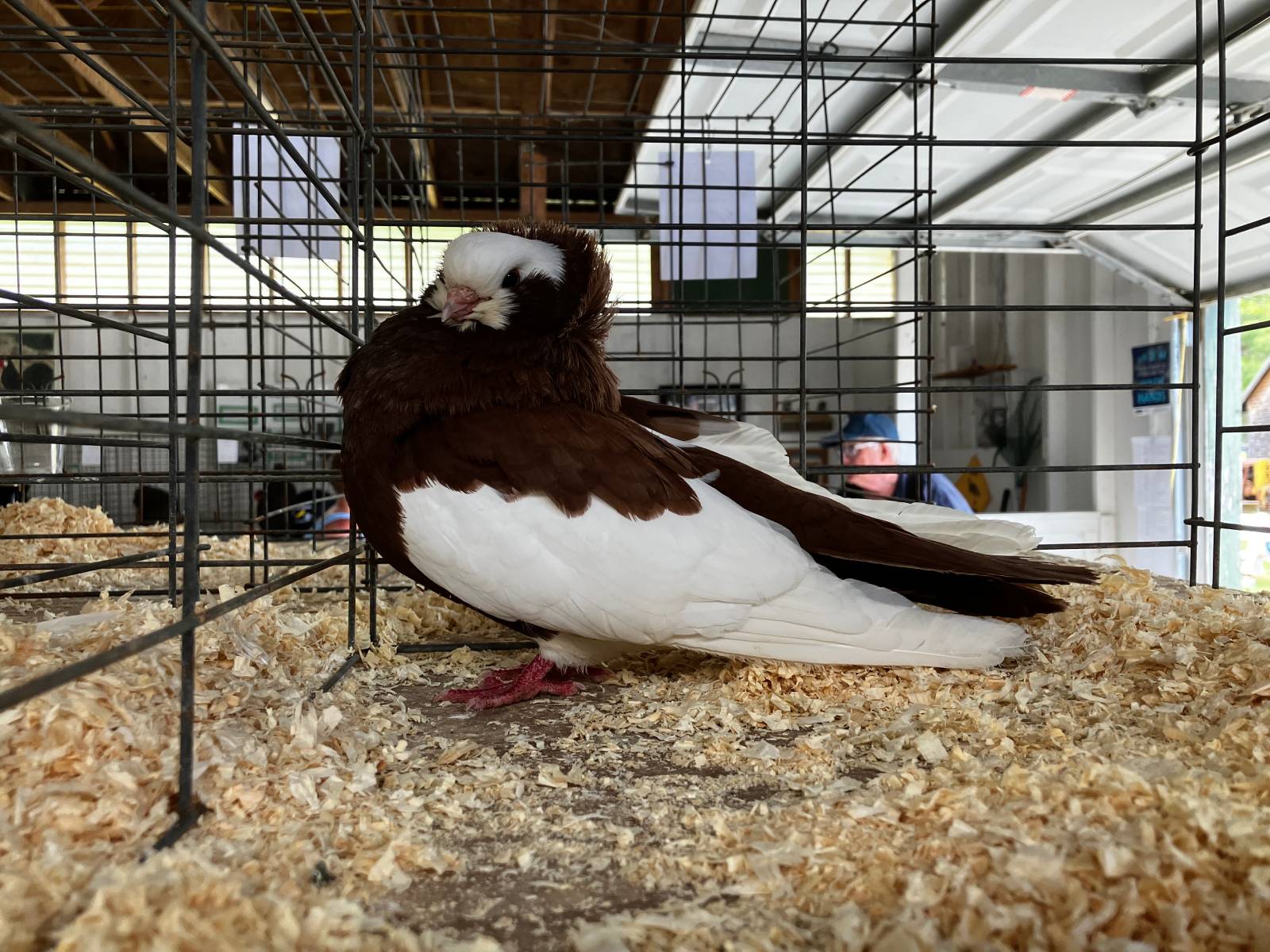
Pigeons are often overlooked by those interested in showing birds at poultry competitions. While chickens are the star act, pigeons have several benefits over their larger companions. While often categorized as poultry, pigeons and doves are their own class of bird. United States Department of Agriculture (USDA) regulations refer to them as Columbiformes and regulate them separately from poultry and waterfowl, in part due to the differences in common illnesses. Their size and care also make them available to a broader range of breeders.
Choosing Show Pigeons
There are hundreds of breeds of pigeons kept for a variety of reasons. Sporting pigeons include racing pigeons, messengers, homing pigeons, and several athletic breeds that perform tricks. Utility pigeons are bred and kept for meat purposes. Exhibition pigeons are those bred for their plumage and are the birds most likely found in the show ring. Like chickens, each type and breed has a standard of perfection used to define breeding and showing ideals.
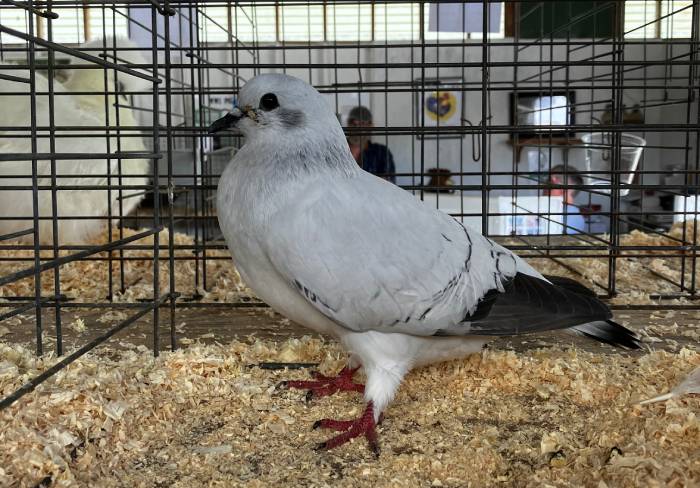
Choosing healthy specimens is important regardless of the type. Judging requirements look for a balanced bird, with symmetry in their build, balance, and wings. Clear eyes, a thick layer of feathers, and a broad back are also positive traits. A strong bone structure suggests a healthier bird as well.
Housing Pigeons
As with chickens, show birds require more specialized care than the casual or working flock. However, pigeons are hearty birds and tolerate extreme temperatures well. This means their housing requirements can be less finicky than some more fragile birds. However, they don’t tolerate drafty conditions or wet weather well, so they should have a secure, dry shelter — usually called a loft.
Pigeons mate in pairs, unlike chickens, so while a loft may house several birds, each couple is generally supplied a cubicle — if not their own complete, separate area. Pigeon experts suggest 27 square feet for every two birds, keeping in mind that the young will also need space.
Their hardiness and size make them a great choice for urban or other small-space breeders. While you should always check local regulations, pigeons are often allowed and common, even in cities that ban other forms of poultry.
When Pigeons Get Sick
Pigeons can be prone to illness, especially under damp conditions. Diseases commonly found in other poultry, such as coccidiosis, E-coli, parasites, and respiratory issues, can also be found in pigeons, and treatments are similar across bird species.
In addition, it’s estimated that 80 to 90 percent of pigeons carry the parasite which causes the disease called canker. Trichomoniasis gallinae is a microscopic protozoan primarily found in the crop, and birds can often be carriers without showing symptoms. This allows the disease to spread easily via waterers, feeders, or adults feeding their young. When parasite loads grow too high, birds have difficulty swallowing, lose weight, and — after death — signs of the infection can be found in the throat and on the liver.
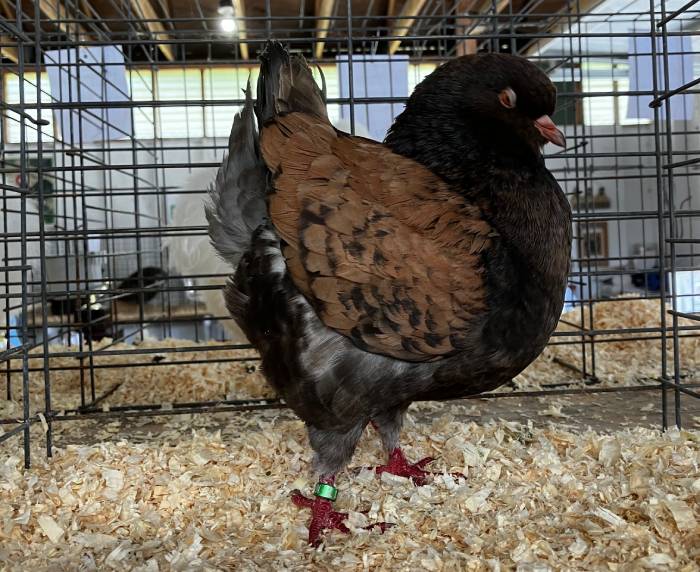
Pigeons have a benefit over chickens on the show circuit since they aren’t prone to all the same illnesses. For instance, pigeons are generally resistant to the avian flu, which makes it less risky to transport them to shows in multiple locations, even with H5N1 rates at concerning levels.
Other Care
A pigeon’s diet consists of specialty pellet or whole grain mixes and unique mineral supplements. Protein levels should be about 13 percent unless the birds are molting or breeding — in which case, the mix should be increased to about 18 percent. Special grits are also available for pigeon crops. Breeders should use pigeon-specific feeders and waterers since pigeons drink differently than chickens.
Sporting pigeons also require training. Homing, racers, rollers, and endurance pigeons all require time and attention to help them perform their best. Information on training can be found online, through breed associations, and with the help of a mentor. The rarer the breed, the harder it will be to find information on proper training techniques. Homing pigeons are probably the most well-known, having played important roles in warfare as late as World War II.
Preparing for Shows
Show birds should be handled regularly so they’re comfortable when the judges pick them up. They should have clean feathers and be free of mites and other parasites. Wiping their feet with a damp cloth before putting them in the show cage is suggested to ensure the handling judge doesn’t get any surprises.
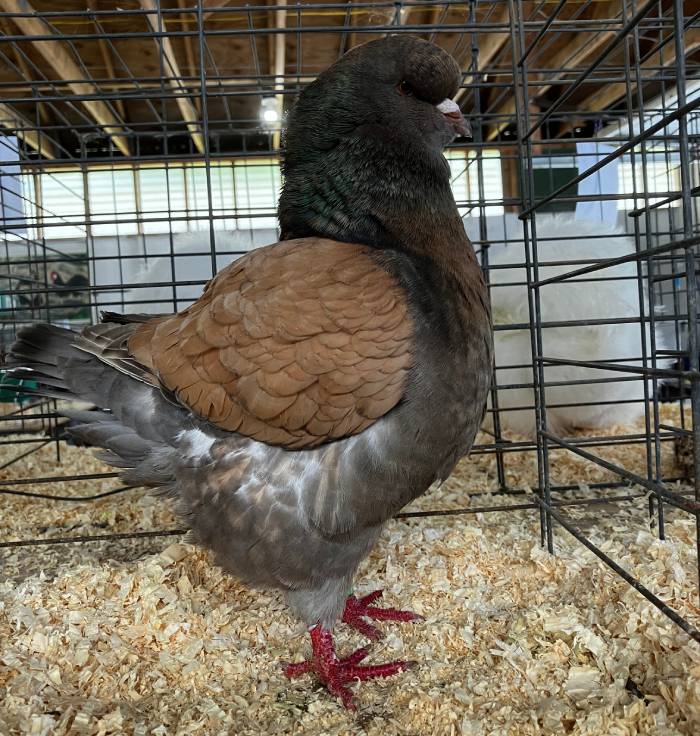
While each breed will have its specific standard of perfection, birds will be judged on a possible score of 100 points, with points awarded for different aspects of the pigeon. Finding and joining a club for the breed you are interested in is the best way to learn these judging points. If there is no breeder association near you, attending a competition and asking questions of the judges or other breeders may be helpful.
Many breeders also have a routine they prefer before shows. This depends on the breed and may depend on the location, since some countries have different show rules. Simple regimens may involve grooming, changes to diet, special supplements, and other tactics designed to show off each bird to its best advantage.
An often-underrated option in the show ring, pigeons can be lovely birds and are worth more attention than they’re given. Their beauty, skills, and hardy physicality make them worth the time of those interested in raising a unique bird for show.
SHERRI TALBOT is the co-owner and operator of Saffron and Honey Homestead in Windsor, Maine. She raises endangered, heritage-breed livestock and hopes someday to make education and writing on conservation breeding her full-time job. Details can be found at SaffronandHoney-Homestead.com or on Facebook at www.Facebook.com/saffronandhoneyhomestead.
- References
- Jacob, Jacquie. (2024). Raising Pigeons in Small and Backyard Flocks. The United States Cooperative Extension System. Available online at https://poultry.extension.org/articles/poultry-management/raising-pigeons-in-small-and-backyard-flocks/
- Moore, Des. (n.d.) Judging Racing Pigeons. Available online at https://desmoore.tripod.com/id56.html
- National Pigeon Association. (2024). Pigeon Information Basic. Available online at https://www.npausa.com/customer_service/pigeon_information_basic.html
- Poultry Show Central. (2023). Beginner’s Guide to Showing Poultry. Available online at https://www.poultryshowcentral.com/Fancy_101.html
- Schaerlaeckens, Ad. (2018). Judging. The website of Ad Schaerlaeckens. Available online at http://www.schaerlaeckens.com/articles/articles-english/Articles%202018%20English/judging/
- U.S. Department of Agriculture. (2024). Importing Columbiformes (Pigeons and Doves) into the United States. Animals and Plant Health Inspection Service. Available online at https://www.aphis.usda.gov/live-animal-import/import-columbiformes-pigeons-doves-united-states
Originally published in the October/November 2024 issue of Backyard Poultry and regularly vetted for accuracy.