Black Jersey Giant Chickens as Meat Birds
When you’re ready to move away from the Cornish Cross.
Reading Time: 5 minutes
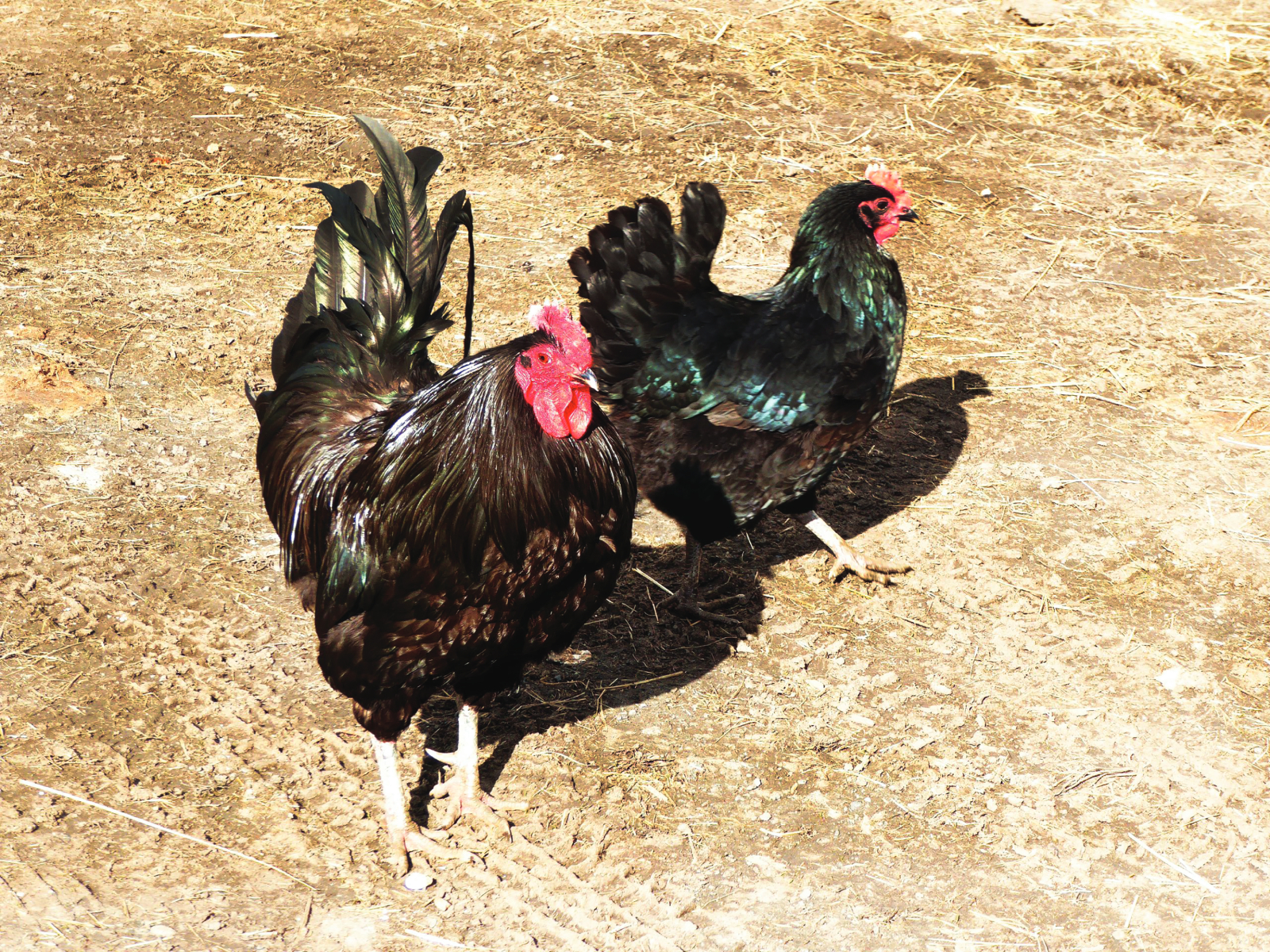
When you’re ready to move away from the Cornish Cross, consider black jersey giant chickens as meat birds for a large heritage breed option that can be hatched on the farm.
When selecting which breed of chicken to raise in a backyard flock, most people are lured in by descriptions of “dual-purpose” birds, which promise to deliver both eggs and meat. Most popular breeds fall into this category: Rhode Island Red, Ameraucana, Buff Orpington, etc.
These claims aren’t lies. Most breeds provide adequate numbers of eggs, and — technically — every chicken is edible as well. Dual purpose, right?
But try dressing out your average Rhode Island Red or Ameraucana rooster for the dinner table, and you’re likely to be disappointed. The resulting carcass isn’t much bigger than a Cornish game hen and seems hardly worth the effort. It might provide a frugal meal for a single person, but a single bird certainly doesn’t provide enough meat for a family.
So, like most rural Americans, when it came to raising meat birds, we turned to Cornish Crosses. We raised these birds on and off for several years, but stopped for two reasons.
- Reason one: As meat birds, Cornish Crosses fulfill their function superbly. They gain weight at a speed and with a seriousness awesome to behold. Within 10 weeks at the maximum, they’re ready for the freezer. Except here’s the thing: If you don’t put them in the freezer by 9 to 10 weeks, their bodies start to break down. Their organs fail. Their joints give out. They can’t walk. Sometimes they just die. It’s horrifically sad.
- Reason two: Cornish Crosses are hybrids. We can’t breed them to replenish the flock. We’re trying to make our homestead more self-sustaining, not less. If we have to purchase chicks from the feed store every time we want to raise meat birds, we’re taking a step backward, not forward. We looked into what it takes to breed Cornish Crosses, but it turns out they have a complicated tangle of genetics that makes it difficult for the home breeder to replicate the exact lineage without a lot of dedicated work.
Several years ago, after butchering our last batch of Cornish Crosses, we decided “no more.” Never again did we want weird, freaky, mutant chickens on our farm.
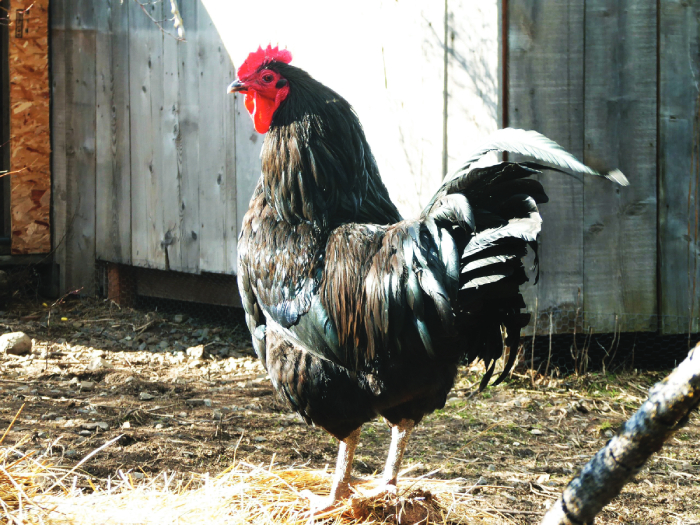
Instead, we started looking into the large heritage breeds that provided meat for the table before factory farms were a thing. That’s how we discovered Jersey Giants.
Bred as a Table Bird
The Jersey Giants are widely recognized as the largest purebred chicken breed by weight. As the name implies, they were originally developed in New Jersey in the late 1800s by two brothers, John and Thomas Black. Jersey Giants were the original “commercial” meat chicken bred to replace the turkey, which was the primary table bird at the time (doubtless because other breeds were too scrawny to provide a substantial meal, which we’ve found is true even now).
They come in three colors: Black, white, and “blue” (a bluish-slate-gray), along with some additional unofficial color variations. On average, the black birds tend to outweigh the white by about a pound. As a breed, we’ve found them to be excellent layers and very prone to broodiness. Additionally, they’re extremely docile and friendly. Believe me, no one would continue to breed birds of that size if they had a mean streak in them!
The hens are larger than your standard Rhode Island Red, but not freakishly so. However, the mature rooster, while not quite equal to a turkey in size, certainly provides enough meat to feed a family.
Jersey Giants have a reputation for growing more slowly than other chicken breeds. In fact, they grow at the same pace; it’s just that they have further to go to reach their full size of 11 to 15 pounds. They tend to achieve their large frame first, then put on weight later. Since roosters take about nine months to achieve maximum weight, their feed-to-weight conversion is considered poor. While this may be a factor for commercial enterprises, it’s not as important on a homestead. Allowing the birds to free-range and giving them access to a compost pile will help mitigate feed costs.
Since the weight of a dressed (butchered) chicken is about 75 percent of live weight, a mature Jersey Giant rooster of 11 to 15 pounds will dress out to between 8.25 pounds and 11.25 pounds at butchering. While this doesn’t approach commercial turkeys in final weight, it’s a vast improvement over the typical “dual-purpose” chicken.
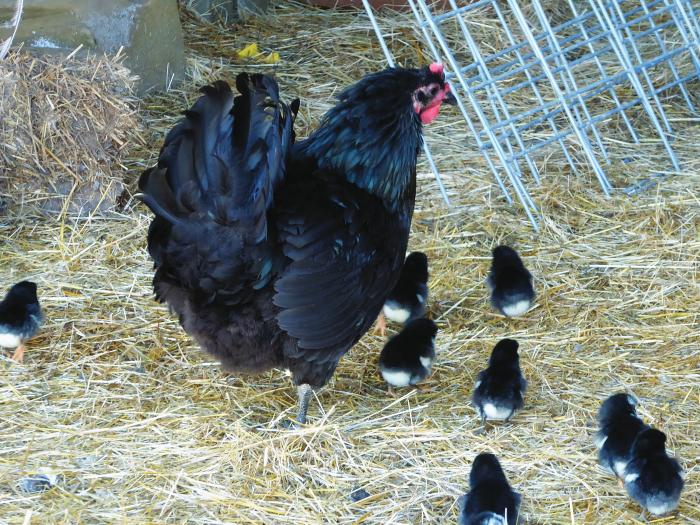
Jersey Giants are considered a heritage breed, which has several benefits: They reproduce and maintain their genetic qualities through natural mating; they have a long, productive outdoor lifespan; and their slow growth rate means their skeletal structure, organs, and muscle mass develop in a healthy manner.
Benefits of Jersey Giants
- They make a table bird of suitable size for a family.
- They’re reasonably cold-hardy, although they’re prone to frostbite on their combs in bitterly cold weather (consider installing a coop heater under such conditions).
- Since the hens go broody easily, a flock is sustainable. New birds can be raised to replace older birds.
- They’re not prone to health issues.
- The hens are excellent layers.
Flaws of Jersey Giants
- Slower maturity for roosters destined to become meat birds.
- Not suitable for small yards. Because of their larger size, Jersey Giants require room to roam. They thrive in larger spaces and free-range opportunities.
- They require larger coops proportioned to their size. They benefit from lower roosting bars (since they have difficulty flying up to higher bars), larger nest boxes, and larger doors for outside access.
- Their dark feathers can leave dark pinfeathers on a plucked bird after butchering. Raising white Jersey Giants will eliminate this issue.
- Roosters, due to their large size, can be a bit tough on the hens. We had a few bald ladies with bare backs until the boys got into their stride. We haven’t found the roosters to be aggressive toward people.
- They require proportionately more feed, which can be offset by allowing them to free-range.
- They tend to go broody. While this is a benefit for most homesteaders, some backyard enthusiasts aren’t prepared to handle broody hens or baby chicks.
- They don’t handle heat well due to their large size and feather density. If you live in a very hot climate, make sure adequate shade and cooling options are offered or select a different breed.
For those wanting an excellent all-around (and truly dual-purpose) backyard chicken, the Jersey Giant is well worth considering.
Patrice Lewis lives on a small homestead in North Idaho. A wife, mother, author, blogger, columnist, and speaker, she’s practiced and written about rural subjects for over 30 years. Patrice enjoys self-sufficiency projects such as animal husbandry, small-scale dairy production, garden and food preservation.
Originally published in the June/July 2026 issue of Backyard Poultry and regularly vetted for accuracy.