Winged Predators of Chickens and Poultry
Reading Time: 5 minutes
by Erin Snyder
Winged predators of chickens and poultry are among the most common predators that attack backyard poultry flocks, but are also among the easiest predators to deter. Whether your backyard is visited by hawks, falcons, eagles, or owls, learn how to recognize these flying predators by their calling cards, spot an attacker before they strike, and prevent aerial attacks.
Hawks
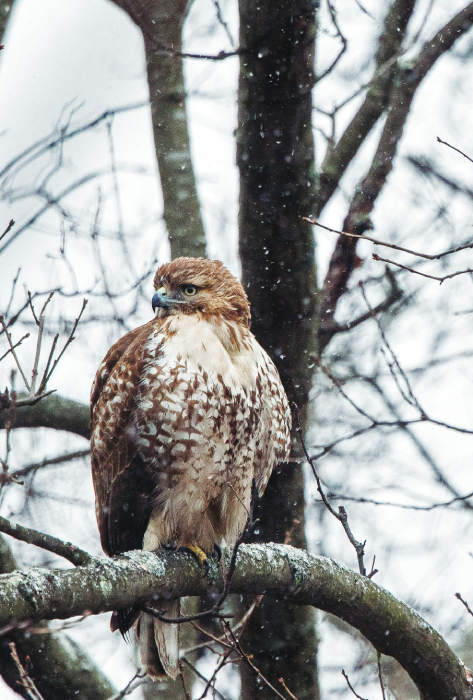
Hawks are the most likely aerial predators to attack backyard flocks. However, not all species of hawks attack domestic poultry; the most common hawks include the northern goshawk, the red-tailed hawk, the sharp-shinned hawk, and the Cooper’s hawk. These graceful birds may not look menacing, gliding through the air, but if you spot one of these hungry birds hanging around, it’s time to take necessary precautions to protect your flock from an attack.
Eagles
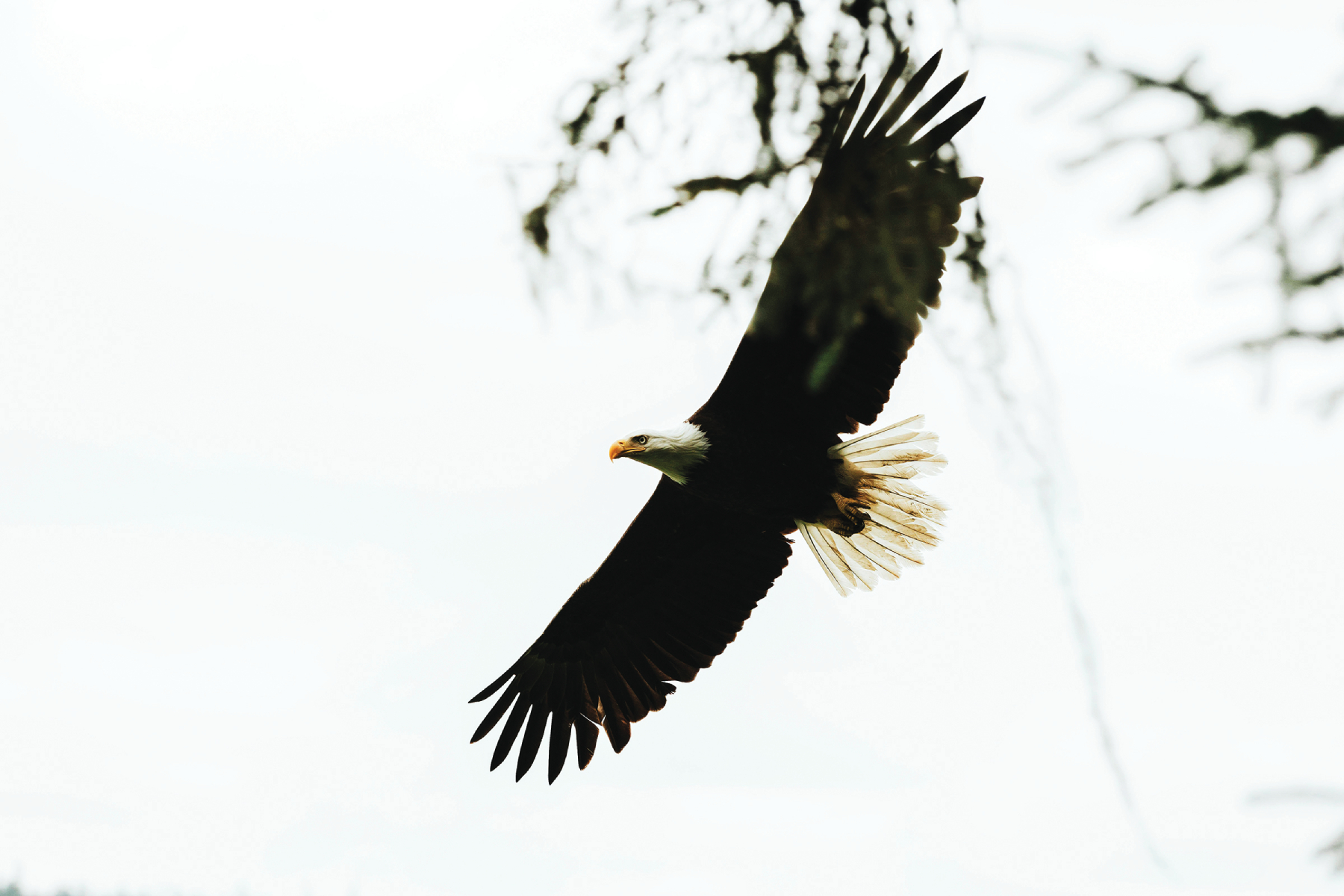
Bald and golden eagles are my flock’s most feared aerial predators. When our chickens and ducks spot an eagle, they immediately go on high alert, warning the other flock members of the danger. While eagles commonly feast on fish and carrion, they occasionally hunt ducks and other poultry.
- Bald eagles are easy to spot by the white feathering on their heads and tails, and by their flying style. They soar through the sky, mostly only flapping their wings while taking off, landing, and making quick movements.
- Golden eagles share a similar flight with hawks, but these magnificent birds can be easily spotted by their large, dark bodies and long wings.
Schwartz on Unsplash
Falcons
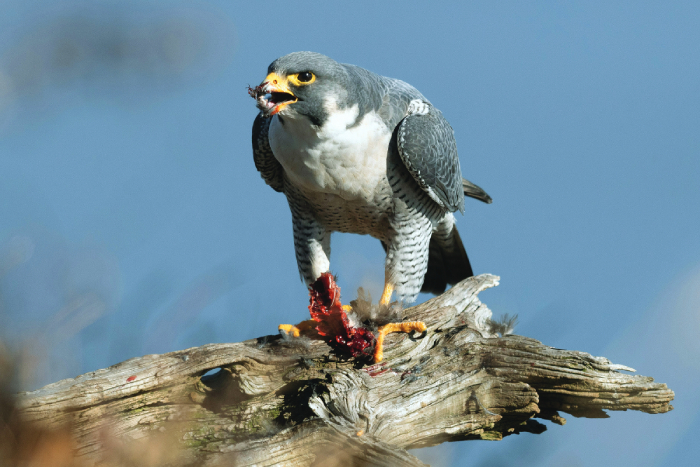
The peregrine falcon is one of the most feared predators of ducks. While these opportunistic hunters occasionally prey on backyard chickens, duck is one of their all-time favorite meals.
Peregrine falcons are ruthless hunters who sometimes attack in pairs to flush out and kill their prey.
While other falcons also prey on poultry, the peregrine falcon remains the most devastating predators to backyard flocks.
Owls
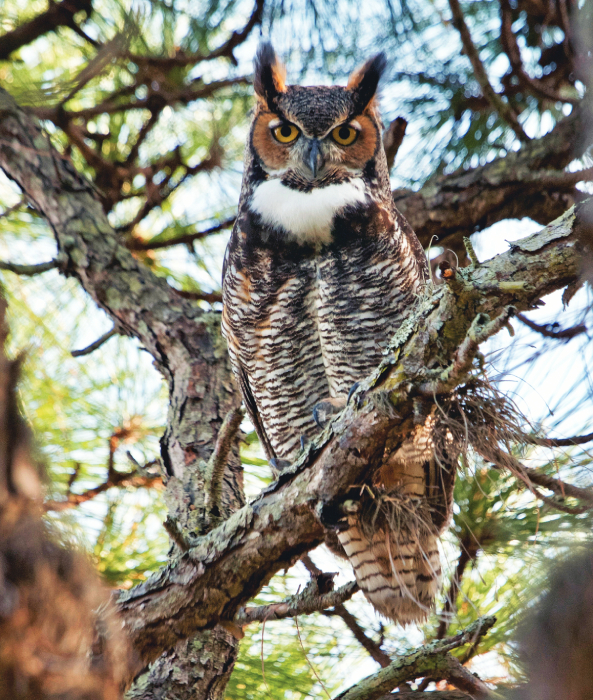
With 19 species across America, owls are among the most common predators. They’re mainly nighttime hunters, so owls shouldn’t pose a threat to backyard flocks that are confined to a completely predator-proofed coop.
Many owl species are too small to take on domestic poultry. However, the great horned and barred owls will hunt poultry if given the opportunity.
Winged Predator Hunting Styles
Before we discuss how to protect your flock from these fascinating birds of prey, let’s examine some hunting styles and how they catch their prey.
- Superb Vision: Birds of prey have exceptional eyesight. Red-tail hawks and northern hawk-owls can see a mouse half a mile away, while some hawk species can spot larger prey up to a mile away.
The eyesight of birds of prey varies significantly by species. While great horned owls can only spot a tiny mouse from across a football field (346 yards), peregrine falcons spot prey from as far as two miles away. The eagle tops them all with superb vision, easily zooming in on prey up to three miles away. - Killing Prey: Speed and strength are two tools owls, eagles, hawks, and falcons use to attack and kill their prey. These powerful birds have been clocked hitting their target at astounding speeds: Owls average 20 to 40 miles per hour (mph), eagles averaging 100 to 150 mph, hawks averaging 100 to 120 mph, and peregrine falcons topping the charts at 200 mph.
Upon hitting their prey, they use their talons to grip it, often breaking the backbone and crushing the skull. These powerful birds have grip strengths ranging from 200 to 500psi, depending on the species.
What to Look for After the Attack
Like any other time your flock has been attacked, the best way to know predator you are dealing with is to look for calling cards. Unlike many other predators, birds of prey don’t always leave a lot to go by, but a few common signs include:
- Poultry disappearing while free-ranging.
- Poultry missing with only scattered feathers lying around.
- Surviving poultry with deep talon marks on the back.
- Piles of feathers under a fencepost or tree where the bird of prey has consumed its meal.
Preventing Attacks
Prevention is the best way to ensure your flock stays safe when dealing with aerial predators. The good news for backyard poultry owners is that preventing an aerial predator attack is usually straightforward. Here are a few simple guidelines.
- Avoid Free-Ranging: Confining your flock to a run instead of free-ranging them is one of the best ways to prevent an attack from aerial predators.
Confining poultry to a secure coop or barn should eliminate most owl attacks. Confine birds to the coop an hour before dusk to discourage nighttime aerial predators from preying on poultry. Also, herd domestic ducks and geese off the pond into a safe enclosure, as birds of prey frequently strike on the water. - Stay Off the Pond: Peregrine falcons frequently attack ducks and geese floating lazily on the pond. Protect domestic waterfowl by restricting access to the pond and providing a kiddie pool instead.
- Aerial Predator-Proofing Tips: Predator-proofing coops and runs against aerial predators is usually straightforward. Cover the tops of the run with a half-inch 16-gauge hardware cloth. The gauge and hole size are crucial, as you want the hardware cloth to hold up to persistent predators. Chicken wire and other flimsy mesh can easily bend and break and won’t offer the same protection against these deadly predators.
Free-Ranging Safely
Even when poultry aren’t allowed to roam unsupervised, many owners still allow their backyard flocks out of the run for some supervised foraging time. Supervised free-ranging is considered safer, as predators are unlikely to attack when a human is nearby. However, supervised free-range time isn’t foolproof. Protect your flock by following these guidelines for a safe and fun foraging time.
- Look for Danger: Before allowing your flock to leave the safety of the run, scan the sky and nearby areas to ensure no predators are flying, strolling, or crouching closely.
- Stay Close: Staying within a few yards of poultry will deter predators from attacking.
- Avoid Prime Hunting Times: Never allow poultry to free-range (even supervised) during high predation times, such as an hour after sunrise and before sunset.
Protecting your flock from an aerial attack is possible by following these safety rules and providing your flock with a predator-proofed coop and run.
Resources
https://www.greatswamp.org/did-you-know-about-red-tailed-hawks/
https://nationalzoo.si.edu/animals/bald-eagle
https://www.allaboutbirds.org/guide/Golden_Eagle/id
https://www.nwf.org/Educational-Resources/Wildlife-Guide/Birds/Peregrine-Falcon
https://www.audubon.org/field-guide/bird/peregrine-falcon
https://abcbirds.org/
https://poultry.extension.org/articles/poultry-management/predator-management-for-small-and-backyard-poultry-flocks/
https://www.audubon.org/magazine/13-fun-facts-about-owls
https://www.pa.gov/agencies/pgc/wildlife/discover-pa-wildlife/hawks-and-falcons
https://ferrybluffeaglecouncil.org/wp-content/uploads/2017/12/Bald-Eagle-Facts-Figures.pdf
Erin Snyder and her family have raised chickens and ducks for nearly two decades. She’s passionate about all things poultry but is especially interested in poultry nutrition, predator protection, egg-laying disorders, and helping chickens live their best lives well into their golden years. You can follow her chicken adventures on her newly hatched Instagram page: www.Instagram.com/TheHenhouseHygge/
Originally published in the December 2024/January 2025 issue of Backyard Poultry and regularly vetted for accuracy.