Hybrid Vs. Heritage Turkey Breeds
Differences in Turkey Breeds
by Sherri Talbot
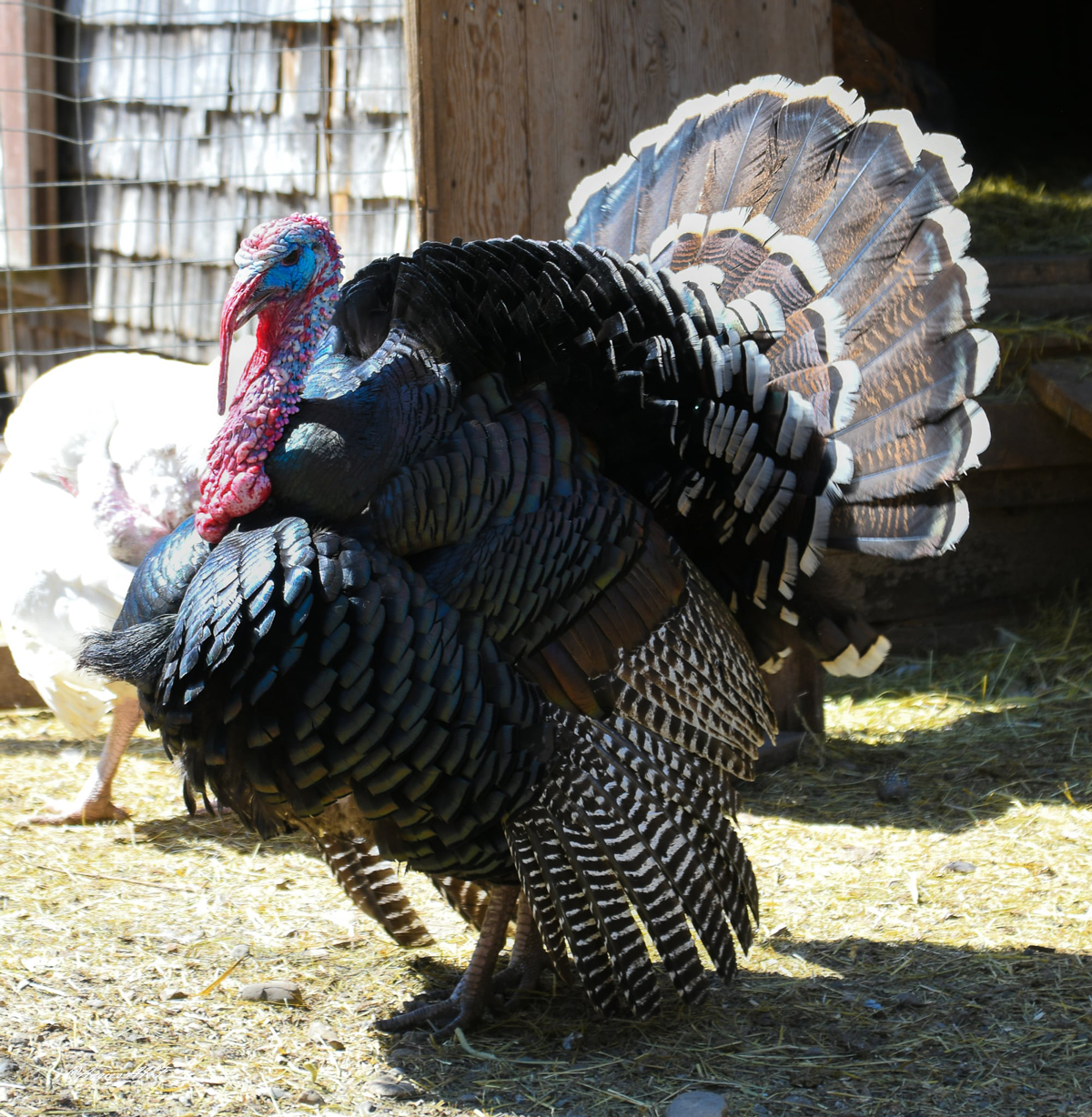
Wild turkeys are native only to the Americas, and from them come all the domestic breeds we associate with holiday dinners. The first domestication attempts led to heritage breeds, and then later to the broad-breasted production breeds that most modern grocery stores stock today. On average, heritage breeds have longer lifespans, can naturally reproduce, and have slower growth than hybrids.
Heritage Breeds
More directly related to wild turkeys, heritage breeds have larger legs and thighs than the broad-breasted varieties. There are 12 recognized breeds, with eight classified as “Watch” or “Threatened” by the American Livestock Conservancy (ALC). The Royal Palm and Beltsville Small White are the smallest, weighing as little as 10 pounds — not much more than a broiler chicken. For those looking for a bigger bird, the Standard Bronze can mature as hefty as 38 pounds.
To be classified as a heritage breed, birds must have been fertilized naturally, and the eggs are required to average a fertility rate of 70 to 80 percent. The poults will mature in around 26 to 28 weeks. Hens retain their reproductive capabilities for about seven years and toms for about five years. Breeders have to deal with the fact that heritage breeds also remain capable of flight. They can be more expensive for breeders to raise, especially when fed commercial feed, since they’re slower growers than a hybrid turkey. However, higher prices and a renewed interest in heritage breeds for meat has increased interest in raising these varieties, and even pulled some breeds back from the brink of extinction.
Raising heritage breeds can be more efficient for breeders in some ways, thanks to their ability to gain weight on natural foods as efficiently as on commercial feed. They mate naturally and brood their own young. This allows farmers the option of not purchasing new stock each year or running an incubator. When brooding, two hens may share a nest for further protection, and toms will even watch over nests for short periods of time. Their parenting skills are excellent, and both males and females will watch over the young.
However, the longer time to reach maturity, dark feather coloring, and smaller breast portion means that broad-breasted production birds remain the more commonly raised and sold.
Production Breeds
Production turkeys are the large-breasted, fast-growing birds that one finds in a grocery store cooler around the holidays. These birds have been bred to reach slaughter weight extremely quickly. Females are processed at about 14 weeks and will average around 15 pounds, for those looking for a smaller carcass. Those looking to feed a bigger crowd will have to wait about 18 weeks for a tom to reach around 38 pounds. Toms may also be processed into parts for sale.
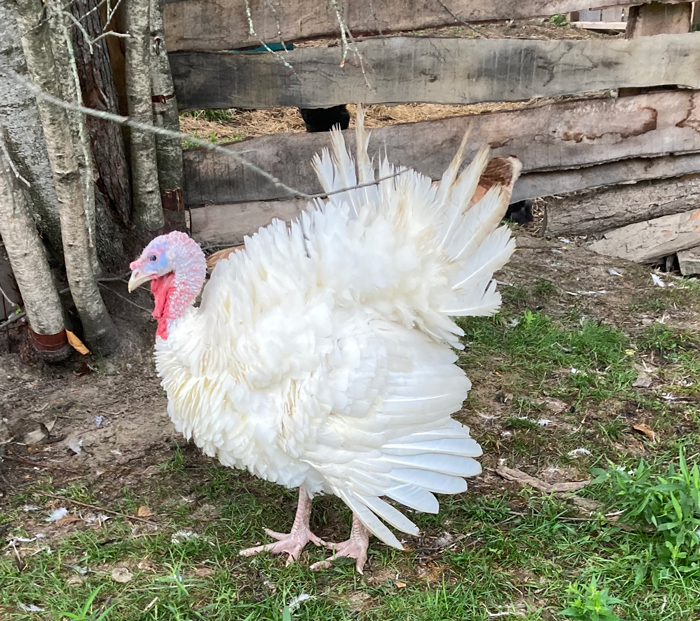
The White Broad Breasted turkey is the most common domesticated turkey in the United States. While the Broad Breasted Bronze also makes for a quick-growing, meaty carcass, white birds leave no marks on the meat when their pin feathers are removed. This is seen as making for a more aesthetic dinner and therefore is more sought after.
While most of these turkeys are butchered between 14 and 18 weeks, breeding White Broad Breasted turkeys are kept until about 28 weeks when the hens begin to lay and the males reach sexual maturity. Like chickens, a turkey hen is born containing a lifetime’s worth of eggs, and a turkey’s egg-laying period is limited. Because of this, light is restricted to prevent egg production before they’ve been fertilized.
Breeding turkeys are segregated by sex and raised without seeing the opposite sex. Since their size prevents natural mating, toms chosen for breeding must have their semen collected, and hens must be artificially inseminated every seven days. The hen will lay for about 26 weeks and produce 100 to 130 eggs. These will be collected, incubated, and, once hatched, sent to a separate facility to put on weight until they’re ready for slaughter. The breeding hen is also processed once she has completed a single cycle of egg-laying.
On the grow-out farms, buildings are environmentally controlled, and biosecurity is vital to keeping the birds healthy. All poults raised in production facilities are vaccinated, and given antibiotics — with the advice of a veterinarian — when birds get sick.
To help promote rapid growth while providing needed nutrition, the birds are fed a mix of soybeans, corn, and supplemental vitamins and minerals. Depending on the source, it’s estimated to take anywhere from 75 to 90 pounds of feed to raise a tom up to 38 pounds. This kind of quick feed intake and growth rate mean that production turkeys have a far shorter lifespan and — much like broiler chickens — can be prone to issues with their legs, broken bones, and other health issues if not butchered in a timely manner.
Choosing a Breed
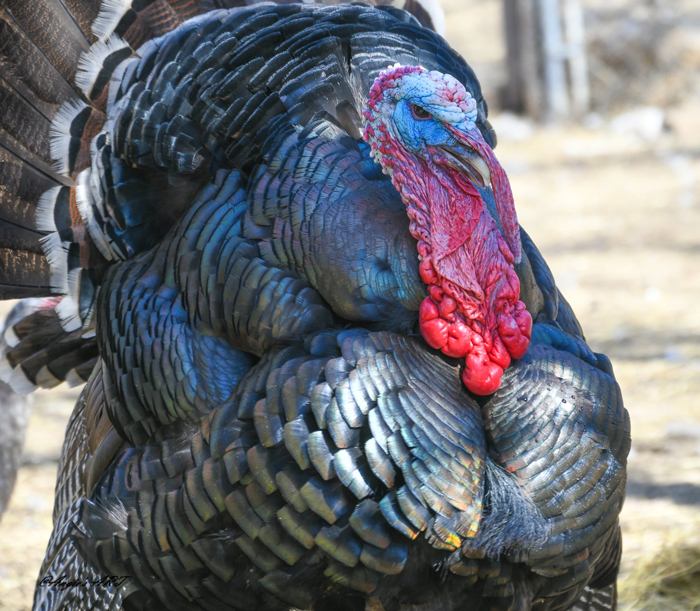
Choosing a breed of turkey will depend on the homesteaders’ needs.
For those not interested in wintering lines over from year to year, and just looking to raise large, docile birds for the holiday season, production birds will grow larger, more quickly, and reach slaughter weight around 14 to 18 weeks. They’re most commonly white, leaving a clean-looking carcass, though Broad Breasted Bronze are available.
However, these large production breeds are prone to health issues that result from their weight, and without strict biosecurity can be prone to other illnesses as well. They’ll require more hands-on care, which can be problematic for a small homestead.
For those who want a hardier breed with the ability to reproduce and forage, heritage breeds are a better option. Different heritage breeds provide different carcass sizes, depending on one’s needs, and they also come in a variety of colors. These breeds aren’t specialized, though, and produce a less fatty meat with a stronger flavor than their more commercially adapted cousins.
References
Definition of a Heritage Turkey. (n.d.) The Livestock Conservancy: Heritage Turkeys. Available online at https://livestockconservancy.org/heritage-turkey-definition/
Garman, Janet. (2022) Comparing Heritage and Production Turkeys. Murray McMurray. Available online at https://blog.mcmurrayhatchery.com/2022/06/08/ comparing-heritage-and-production-turkey-breeds/
Modern Turkey Industry. (n.d.). Penn State Extension: Pennsylvania 4-H. Available online at https:// extension.psu.edu/programs/4-h/opportunities/projects/animal-science/poultry/ raising-rearing/viii-other-online-resources/the-chicken/modern-turkey-industry
Mulhollem, Jeff. (2018). Heritage turkey production research: It’s profitable but more difficult. Penn State. Available online at www.psu.edu/news/research/ story/heritage-turkey-production-research-its-profitable-more-difficult
Raising America’s Turkeys. (n.d.) National Turkey Federation. Available online at https://www.eatturkey.org/raising-turkeys/
Sherri Talbot is the co-owner and operator of Saffron and Honey Homestead in Windsor, Maine. She raises endangered, heritage-breed livestock and hopes someday to make education and writing on conservation breeding her full-time job. Details can be found at SaffronandHoneyHomestead.com or on Facebook.
Originally published in the August/ September 2025 issue of Backyard Poultry and regularly vetted for accuracy.